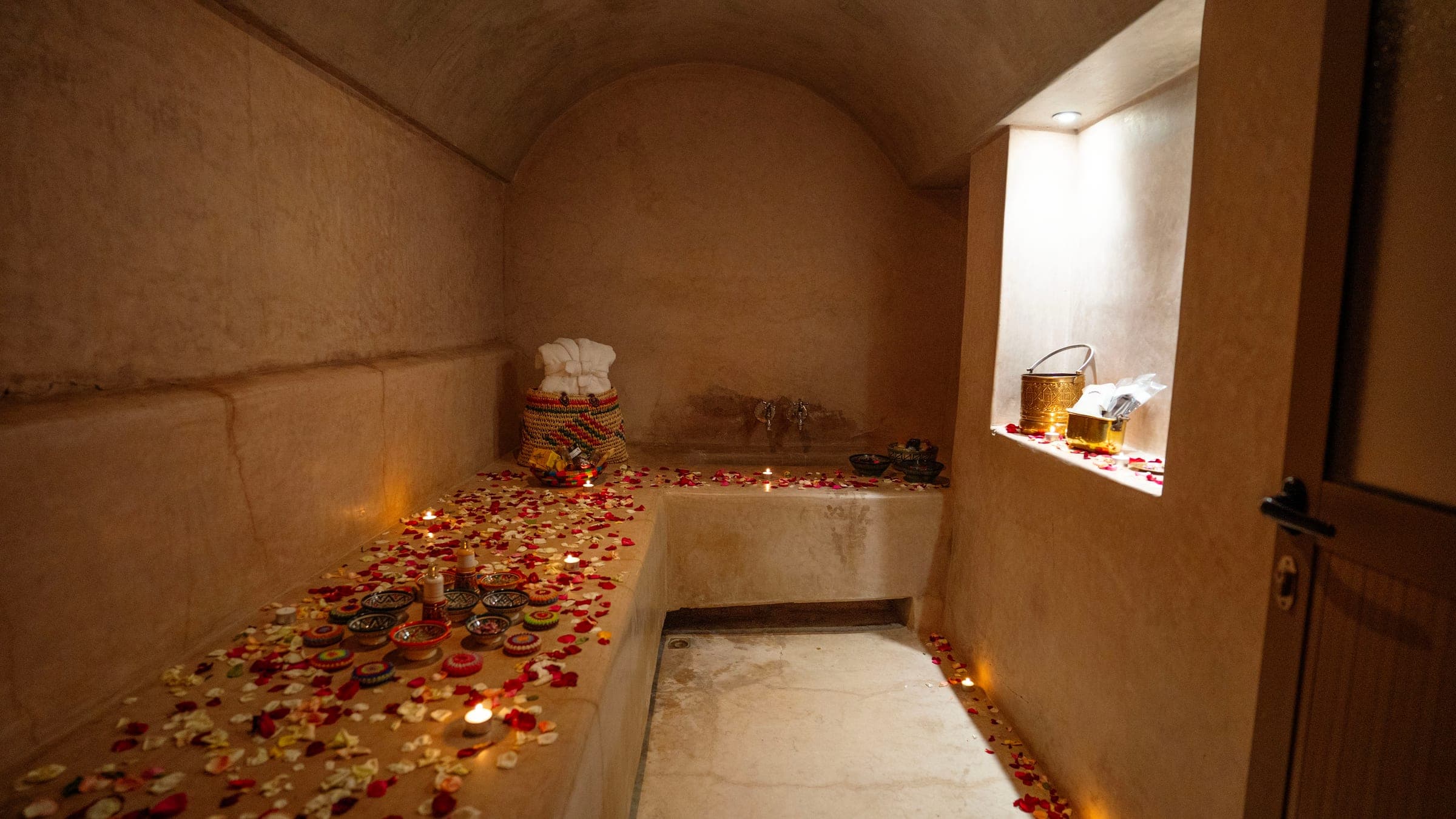
A Moroccan hammam is a steam bath followed by a hands-on cleansing: savon noir (black soap) softens the skin, a kessa glove scrubs it, and clay or oil finishes it. This guide explains each step, what to wear, how the public hammam differs from a spa, and how to choose one in Marrakech.
What is a Moroccan hammam?
A hammam is a heated, steam-filled room for washing, and in Morocco it is also a weekly habit. Families have traditionally gone once a week to scrub away the week's dust, catch up with neighbours and rest. Unlike a sauna, you don't just sit in the heat: the steam prepares the skin for a thorough wash and scrub.
Where does the hammam come from?
The hammam grew out of the Roman and Greek baths, which the Islamic world adopted and adapted, with an emphasis on washing and purity. In Moroccan cities, the neighbourhood hammam often stood near the mosque, and in older quarters it could share its fire with the local bakery. Most neighbourhoods in Marrakech still have one.
What happens during a hammam, step by step?
Every hammam follows the same order, whether it is a public bath or a spa. At Le Bain Blanc, our Classic Hammam takes about 30 minutes and covers each of these steps.
- The steam. You rest in the warm, humid room for several minutes. The heat opens the skin and loosens dead cells.
- Savon noir. A thick black soap made from olives is spread over the body and left for a few minutes. It doesn't foam like ordinary soap; it softens the skin for the scrub.
- The kessa scrub. The practitioner rinses the soap off and scrubs the whole body with a kessa, a rough glove. Grey rolls of dead skin come away, which is normal and the sign the scrub worked.
- Rinse and wash. Warm water, then a shampoo and body wash.
- Clay or oil. Many rituals finish with rhassoul clay, a mask for the body or hair, or argan oil to soften the skin.
- Rest. You wrap up and rest with a glass of mint tea while your body cools down.
What is savon noir made of?
Savon noir is a soft, dark soap made from olives, often with olive oil and sometimes eucalyptus. Its texture is closer to a paste than a bar. Left on the skin for a few minutes in the steam, it softens the outer layer so the kessa can lift it off.
What is a kessa glove?
A kessa is a rough, woven glove used only for the hammam scrub. Its fabric catches the softened dead skin without needing pressure that hurts. The scrub should feel firm, not painful: tell your practitioner if it is too strong.
What is rhassoul?
Rhassoul, also written ghassoul, is a clay mined in the Moulouya valley in eastern Morocco. Mixed with water or flower water, it becomes a smooth paste applied to the body, face or hair, then rinsed off. Our Royal Hammam Ritual ends with a full-body ghassoul wrap infused with seven herbs and a red clay mask for the face.
What should I wear to a hammam?
In a public hammam, women usually wear underwear bottoms and men wear shorts or a swimsuit, and everyone brings their own soap, kessa, towel and sandals. In a spa hammam like ours, you need nothing: we provide a robe, towels and slippers, and disposable underwear if you prefer.
Public hammam or spa hammam?
The public hammam is the everyday version: a few warm rooms, separate hours or sections for women and men, and a small entrance fee. You wash yourself, or pay an attendant for the scrub. It is a real local experience but can be confusing on a first visit, and some are reserved for locals.
A spa hammam follows the same ritual in a calmer setting, with a practitioner who does everything for you. It costs more, but you don't need to bring anything or know the customs. Our hammam rituals start at 300 Dh for the Classic Hammam; all prices are on our menu.
How long does a hammam take?
Plan 30 to 60 minutes for the hammam itself, depending on the ritual, and some time afterwards to rest. With a massage after the hammam, which is the usual order, plan 90 minutes to two hours.
Is a hammam good for you?
A hammam leaves the skin noticeably softer, because the scrub removes dead skin, and most people find the heat deeply relaxing. Claims beyond that, about detox or circulation, are less certain. The heat is the main strain on the body, so if you have a heart condition or blood pressure problems, check with your doctor first.
Can I go to a hammam when pregnant?
Pregnant guests can enjoy the hammam with gentler steam and a shorter time in the heat, after checking with their doctor. Tell us when you book. If you would rather skip the heat, our prenatal massage is a gentle alternative and isn't done in the hammam; see our massages in Marrakech.
Can couples do the hammam together?
In a public hammam, no: women and men go separately. In a spa they often can. At Le Bain Blanc, couples share the duo room for the hammam and massage, side by side. See our couples hammam.
Do I need to book?
For a public hammam, no. For a spa hammam, yes, especially in the high season from October to April. We are open every day from 9:00 to 21:00, and you can book online or on WhatsApp at +212 665-602122.
What should I do after a hammam?
Drink water, take it easy for the rest of the hour, and keep your skin out of strong sun for the day, since it has just been scrubbed. Avoid waxing or shaving just before or after the scrub. Moroccans traditionally return weekly; for a visitor, once during the trip is already a good introduction.
How do I choose a hammam in Marrakech?
Look at what the ritual includes (savon noir, kessa and clay, not only steam), who carries it out, how clean the rooms are in recent reviews, and whether the price shown is the final price. Our upcoming guide to the best hammams in Marrakech goes into each of these.
A hammam in Guéliz, five minutes from the medina
Le Bain Blanc keeps the traditional ritual in a quiet setting in Guéliz, the modern centre of Marrakech. Every soap, clay and oil we use is Moroccan: savon noir, rhassoul from the Moulouya valley and argan oil from the Atlas. Our team is all women. If you'd like to try it, see our hammam rituals and prices, or reserve your visit on WhatsApp.